Exploring Mars for Future Colonization

Challenge How Rovers Help
Finding Water Detected ancient riverbeds, underground ice, and hydrated minerals.
Building Oxygen Supply MOXIE demonstrated oxygen production from CO₂.
Radiation Protection Measured exposure levels for designing shielded habitats.
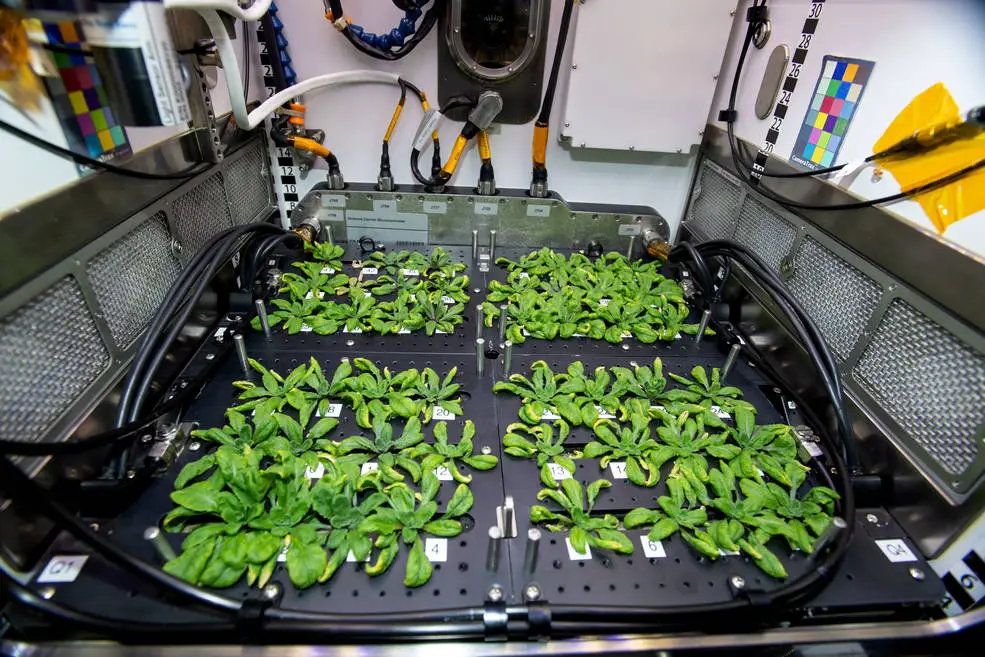
Growing Food Studied Martian soil composition for farming feasibility.
Navigation Tested driving on rough terrain, guiding future rovers & vehicles.
Energy & Power Examined dust storms' effect on solar panels, supporting nuclear power research.

Mars rovers have provided invaluable data for humanity's journey toward colonization.

🚀 Mars Rovers & Their Contributions

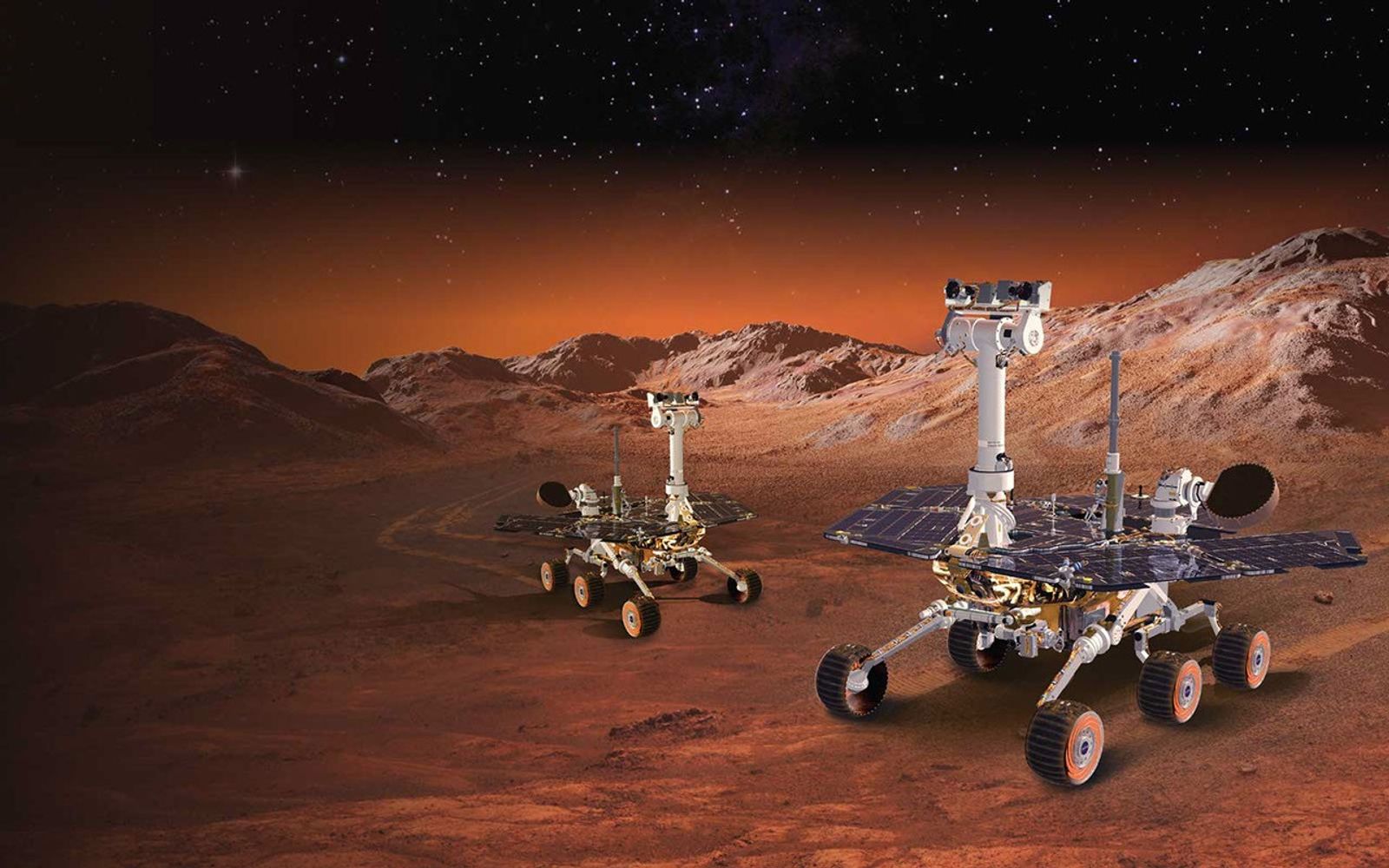
Spirit & Opportunity Rovers on Mars surface

Spirit & Opportunity (2004-2010, 2019)

Primary Goals:

  • Search for past water activity.
  • Study Mars' climate and geology.
  • Find signs of past habitability.

Key Contributions to Colonization:

Evidence of Water:

  • Opportunity found hematite, a mineral that forms in water.
  • Spirit discovered silica-rich deposits, suggesting ancient hydrothermal activity.

Why It Matters? Water is crucial for drinking, oxygen production, and fuel.

Dust & Wind Studies:

  • Rovers experienced dust devils, which naturally cleaned their solar panels.

Why It Matters? Understanding dust behavior helps design self-cleaning systems for future Mars bases.

Terrain Navigation:

  • Helped NASA understand how to design rovers for rocky, sandy, and unpredictable terrains.

Why It Matters? Future habitats and vehicles must withstand Martian conditions.
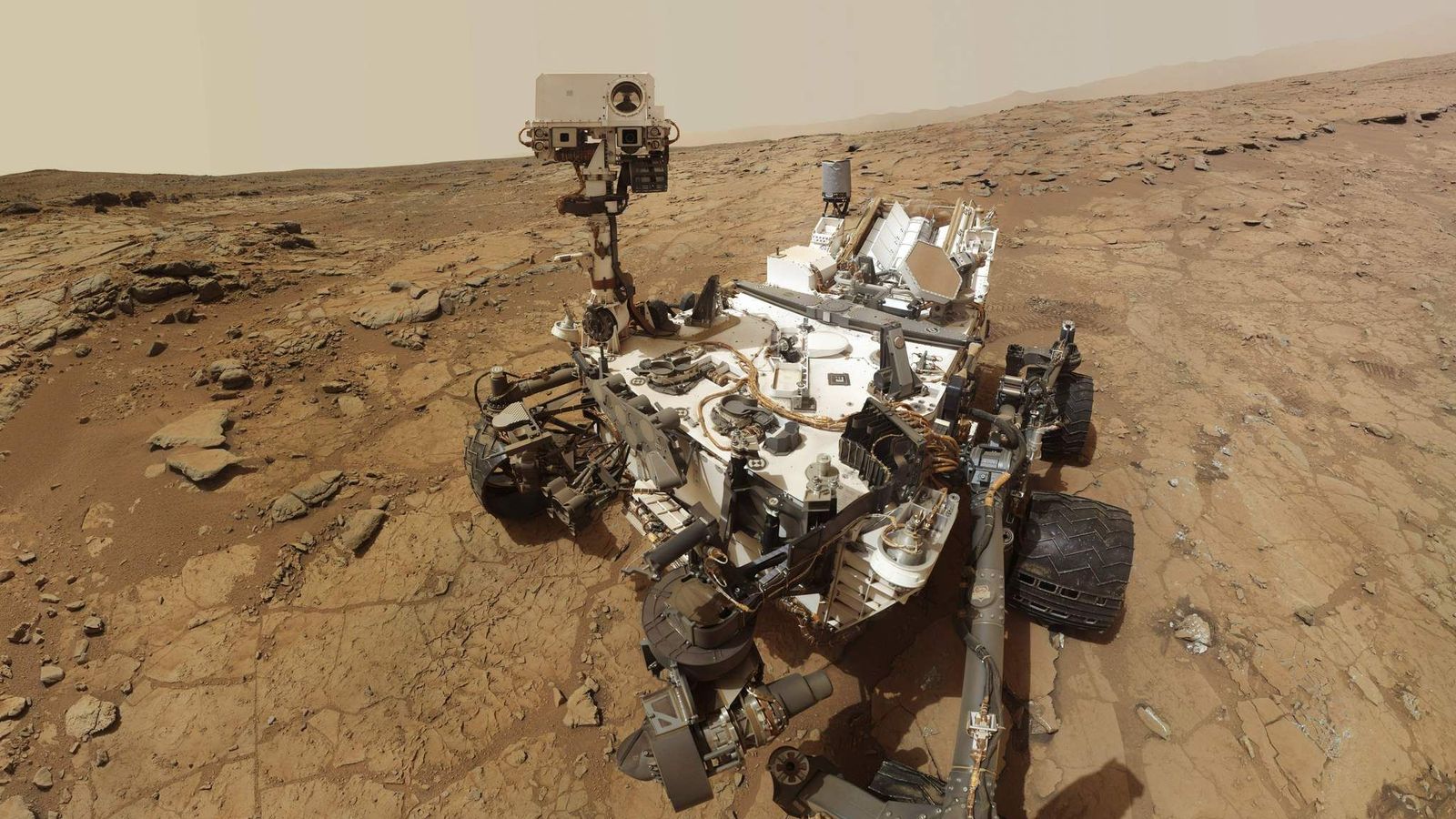
Curiosity Rover exploring Mars

Curiosity (2012 - Present)

Primary Goals:

  • Determine Mars' habitability.
  • Study radiation levels.
  • Analyze soil and atmosphere.

Key Contributions to Colonization:

Discovered an Ancient Lake:

  • Found evidence of a long-lasting freshwater lake in Gale Crater.

Why It Matters? Water is critical for sustaining human life.

Radiation Measurements:

  • Curiosity measured radiation exposure, which is higher than Earth's but manageable with shielding.

Why It Matters? Helps design radiation-protected Mars bases.

Found Organic Molecules:

  • Discovered complex carbon molecules, essential for life.

Why It Matters? Suggests Mars once had conditions suitable for life.

Methane Detection:

  • Detected seasonal methane spikes, possibly from underground sources.

Why It Matters? Could mean biological activity or underground chemistry.

Soil and Rock Analysis:

  • Curiosity found clay minerals, indicating past water interactions.

Why It Matters? Helps locate the best sites for farming.

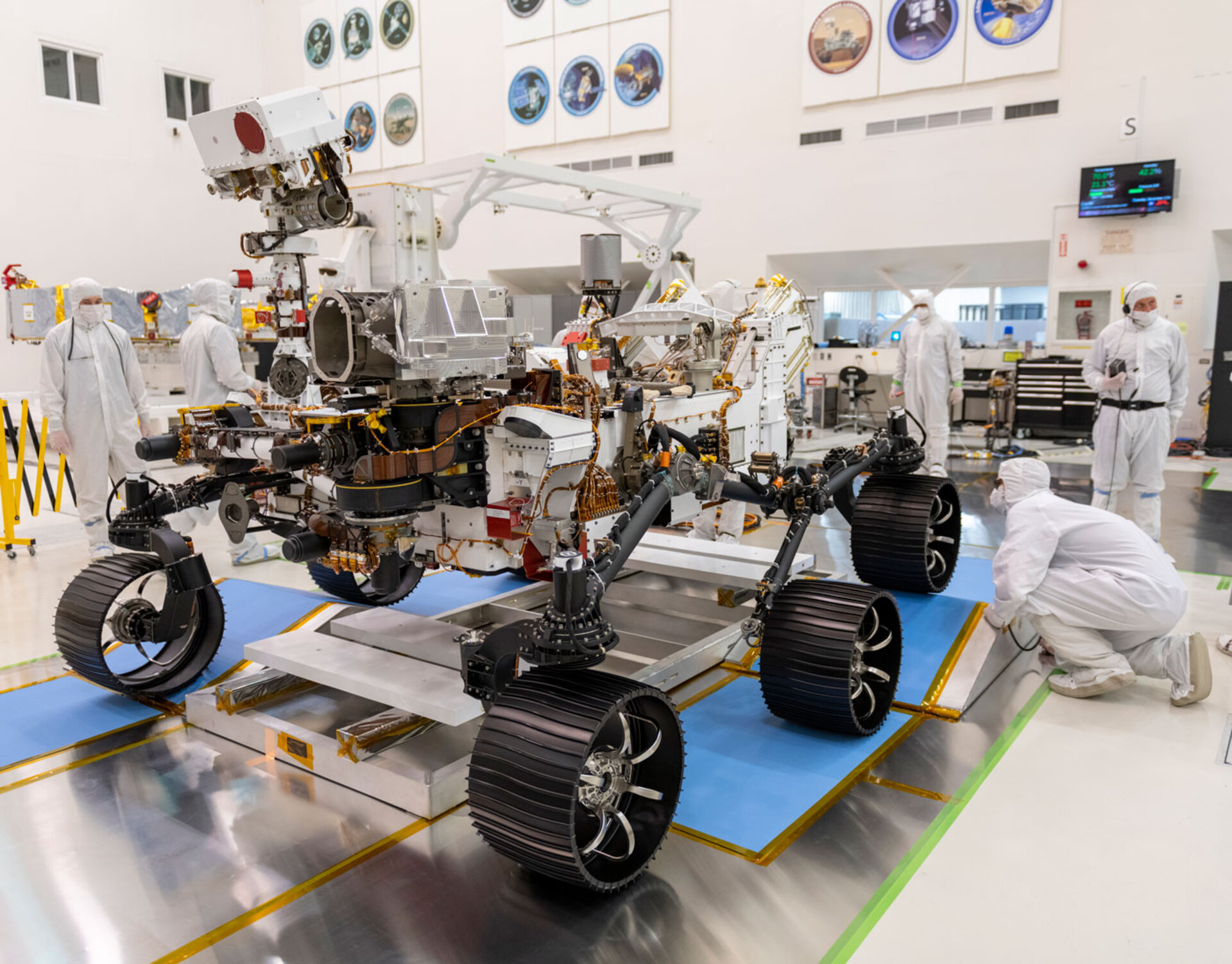
Perseverance Rover with Ingenuity helicopter

Perseverance (2021 - Present)

Primary Goals:

  • Search for signs of ancient life.
  • Test technologies for future colonization.
  • Collect rock samples for return missions.

Key Contributions to Colonization:

MOXIE Experiment - Making Oxygen from CO₂

  • Successfully converted Martian CO₂ into oxygen.

Why It Matters? Future colonies could produce breathable air and rocket fuel.

Helicopter Flight with Ingenuity

  • First-ever powered flight on another planet.

Why It Matters? Helps design drone-based exploration & transport.

Water & Soil Mapping

  • Identifies subsurface water reserves using ground-penetrating radar.

Why It Matters? Underground water could be mined for drinking and farming.

Rock Sample Collection

  • Gathering samples to bring back to Earth for detailed analysis.

Why It Matters? Helps determine if Martian soil is safe for growing crops.

🌍 Terraforming Mars

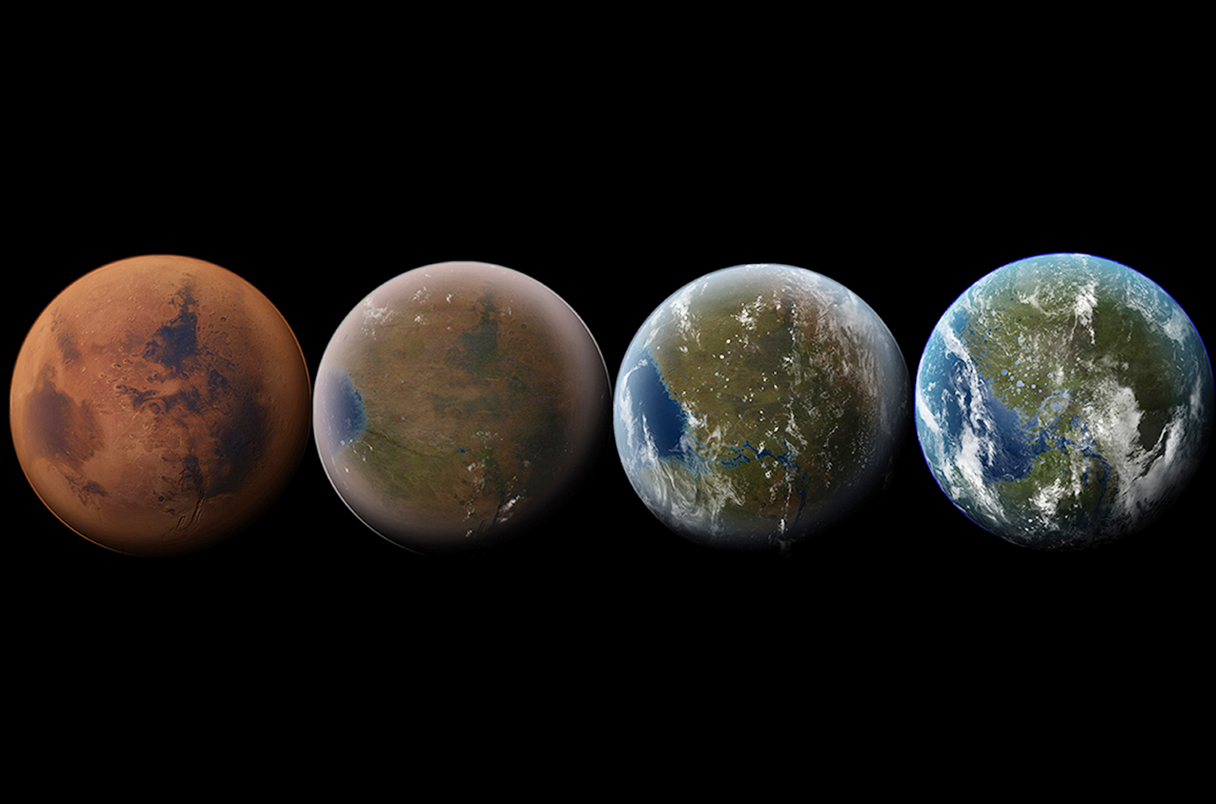
Terraforming Mars: Can We Make It Earth-Like?

Terraforming means modifying Mars' environment to make it habitable for humans, like increasing temperature, adding oxygen, and creating liquid water. However, this process would take centuries to thousands of years.

Challenges of Terraforming Mars

Thin Atmosphere

  • Mars' atmosphere is 1% as thick as Earth's, making it too cold for liquid water.

Lack of a Magnetic Field

  • Without a global magnetic field, Mars loses atmosphere due to solar wind.

Low Temperature

  • The average temperature is -63°C (-81°F)—too cold for Earth life.

No Liquid Water on Surface

  • Water exists as ice or briny subsurface water, but it evaporates quickly due to low pressure.

How Terraforming Could Work

Scientists have proposed several ways to make Mars more habitable:

Releasing Greenhouse Gases ("Warming Mars")

How?

  • Pumping CO₂ from the poles into the atmosphere could increase temperature.
  • Using factories to release super-greenhouse gases like perfluorocarbons (PFCs).

Outcome:

A thicker atmosphere traps more heat, making it easier to sustain liquid water.

Concept art of terraformed Mars
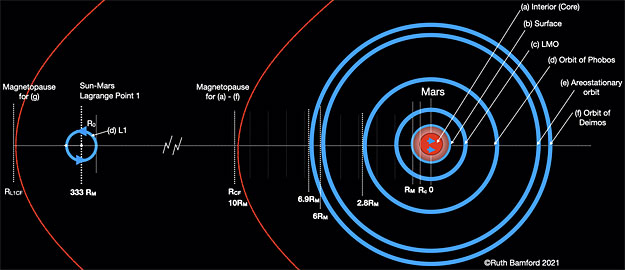
Artificial magnetosphere protecting Mars

Creating an Artificial Magnetosphere

How?

  • A giant magnetic shield placed at Mars' L1 point (between Mars and the Sun) could protect the planet from solar wind erosion.

Outcome:

Prevents the atmosphere from escaping into space, allowing it to thicken over time.

Bringing Microbes & Plants to Produce Oxygen

How?

  • Cyanobacteria (blue-green algae) could be introduced to convert CO₂ into oxygen, just like they did on early Earth.
  • Certain plants could be genetically modified to survive in Martian conditions.

Outcome:

Over centuries, this could gradually increase oxygen levels.

🏡 Habitat Design

Habitat Design: Surviving on Mars

Since terraforming will take centuries, early Mars colonists must live in protected habitats. These structures must provide air, water, and radiation protection.

Different Mars Habitat Designs

Surface Domes (Pressurized Cities)

  • Made from: Transparent domes with triple-layer protection.
  • Purpose: Provides Earth-like environments inside, with farms and buildings.
  • Challenge: Needs constant maintenance & energy.

Underground Bases (Lava Tubes)

  • Made from: Natural Martian lava tubes (cave systems).
  • Purpose: Uses the planet's rock as radiation shielding.
  • Challenge: Limited light & power.

Ice Homes (Mars Ice Dome by NASA)

  • Made from: Thick layers of Martian ice.
  • Purpose: Ice acts as a natural radiation shield and helps store water.
  • Challenge: Requires large-scale ice mining.

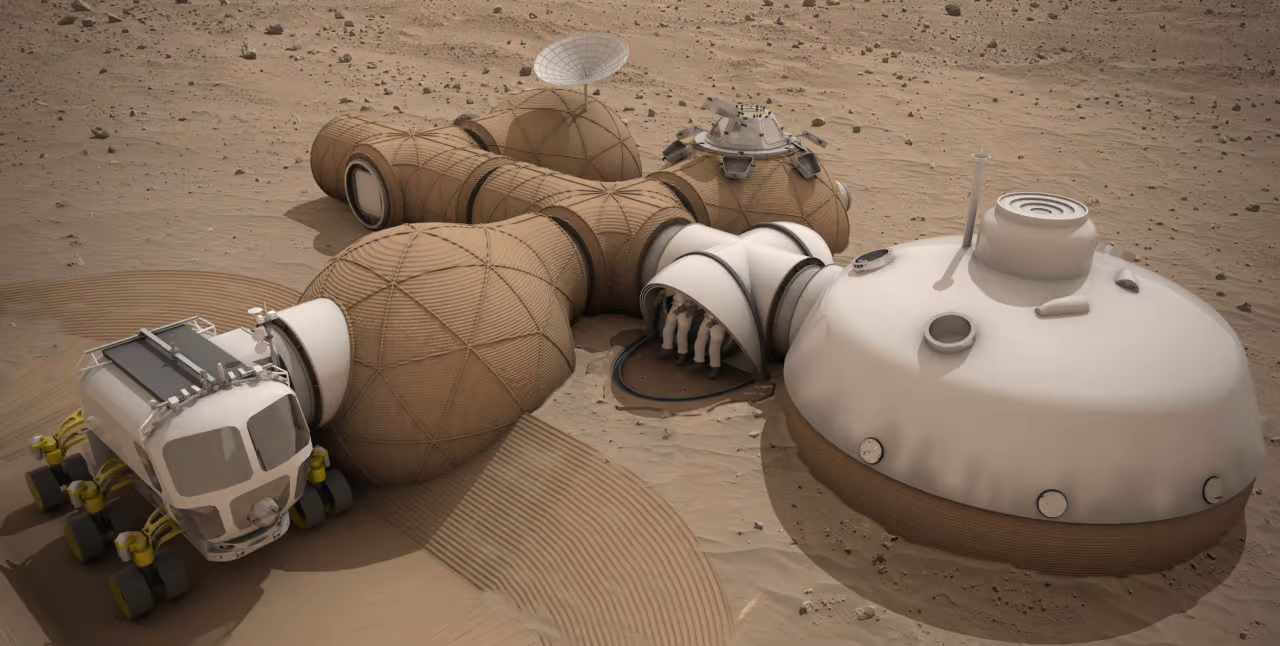
3D-Printed Habitats

  • Made from: Mars soil (regolith) and robotic 3D printers.
  • Purpose: Reduces the need for Earth-based construction materials.
  • Challenge: Needs advanced robotic systems.

Space Stations in Orbit (Mars Cycler)

  • Made from: Rotating space stations that orbit Mars and provide Earth-like gravity.
  • Purpose: A transport hub for future Mars-to-Earth missions.
  • Challenge: Still theoretical, requires massive funding.
Mars habitat concepts

♻️ Life-Support Systems

MOXIE oxygen production experiment

Life-Support Systems: Keeping Colonists Alive

Mars colonists will need self-sustaining systems for air, water, food, and energy.

Producing Oxygen (MOXIE Experiment)

  • How it works: The MOXIE (Mars Oxygen In-Situ Resource Utilization Experiment) on Perseverance successfully made oxygen from CO₂.
  • Future goal: Scaling up MOXIE could allow future colonies to produce enough oxygen for breathing and fuel.

Growing Food on Mars

Mars soil (regolith) is toxic due to perchlorates, but it can be processed for farming.

  • Methods for growing crops:
  • Hydroponics: Plants grown in nutrient-rich water instead of soil.
  • Aeroponics: Plants suspended in air with nutrient mist sprayed on roots.
  • Greenhouses with Artificial Lighting: Protects plants from harsh radiation.

NASA and SpaceX are testing ways to grow crops on Mars.

Water Supply

Mars has water ice in its polar caps and underground.

  • Ways to Get Water on Mars:
  • Melting Ice from Polar Caps.
  • Extracting Water from Martian Soil.
  • Condensing Water from the Atmosphere.

Water is needed for drinking, growing food, and making oxygen & fuel.

Energy Systems: Powering a Mars Colony

Mars lacks a global power grid, so colonies need independent power sources.

  • Potential Energy Solutions:
  • Solar Power (Effective but affected by dust storms).
  • Nuclear Reactors (Reliable, already tested for deep-space missions).
  • Wind Power (Mars has weak winds, but may work in certain areas).
  • Fusion Energy (Still experimental but could power entire colonies).